
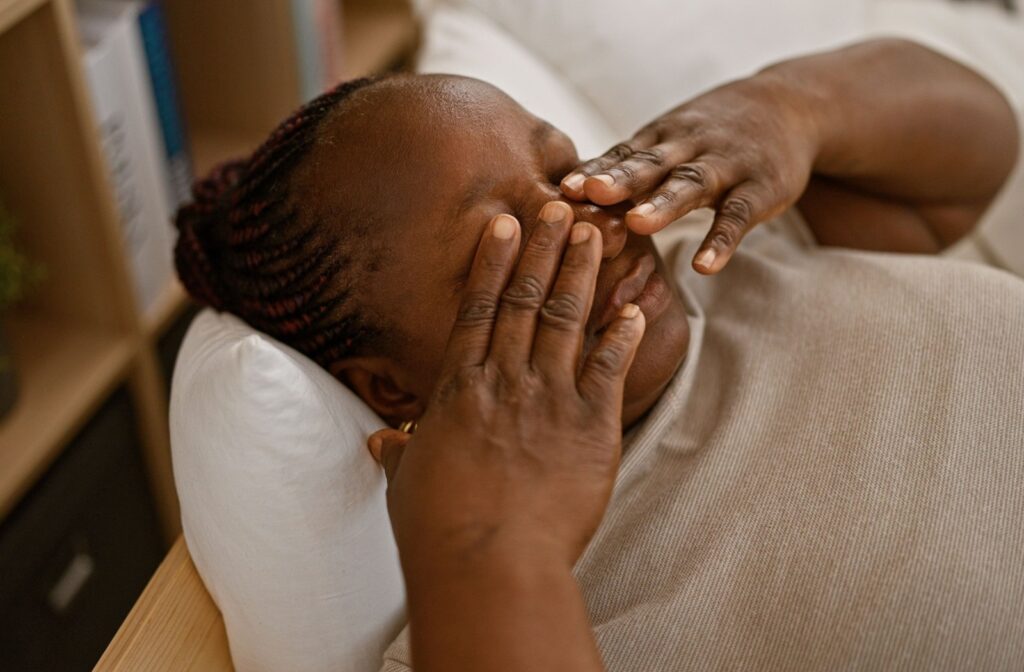
You open your eyes each morning to a scratchy, gritty feeling that makes you want to close your eyes again and go right back to sleep. At Baalman Eye Care Center, we understand how frustrating morning eye discomfort can be.
Morning dry eye can happen because tear production can naturally slow down during sleep, as well as various factors in your environment or health can make it worse. The correct diagnosis and treatment can help you find relief and wake up with comfortable, refreshed eyes. Our comprehensive dry eye therapy options can help to provide the relief you may be seeking.
Common Causes of Morning Dry Eye
Your Sleep Environment
The air in your bedroom plays a bigger role in your eye comfort than you might think. Low humidity from heating systems in winter or air conditioning in summer can pull moisture from your eyes.
Ceiling fans or air vents blowing directly toward your bed can create a constant stream of air across your face. This draft can speed up tear evaporation, leaving your eyes dry and irritated.
Incomplete Eyelid Closure
Some people sleep with their eyes slightly open without realizing it. This condition can become more common as you age. When your eyelids don’t seal completely, your tear film evaporates much faster than it should. You might not even realize this is happening until you start waking up with consistently dry and uncomfortable eyes.
Meibomian Gland Problems
The tiny oil glands (called meibomian glands) that line your eyelids can become blocked or stop working properly. These glands typically add an oily layer to your tears, preventing them from evaporating too quickly. When you’re asleep, you don’t blink to refresh your tear film, which can lead to dry-feeling eyes when you wake.
Age-Related Changes That Can Worsen Dry Eye
Your tear production naturally decreases with age, with noticeable changes often starting around age 40. Women may experience this during menopause, when hormonal changes can reduce tear quality and quantity.
These age-related changes mean that environmental factors that didn’t bother your eyes before might now cause morning dryness. Your eyes simply can’t always compensate for challenging conditions as well as they used to.
Professional Treatment and Relief Options

Tests Used to Diagnose Dry Eye
Modern diagnostic tools can help pinpoint the exact cause of your dry eye. Corneal topography maps the surface of your eyes, while Schirmer tests measure how many tears you produce. Tear breakup time testing can show how quickly your tears evaporate.
These tests help eye doctors understand whether you’re not making enough tears, if your tears evaporate too quickly, or if there’s another underlying issue. Getting the proper diagnosis means you can get treatment that actually addresses your specific problem.
Treatment Options
There are various treatments that focus on improving dry eye symptoms rather than curing it. Options like punctal plugs can help keep the tears you do produce from draining away too quickly by blocking the drainage channels in your eyelids. This allows tears to stay on your eyes longer. For severe cases, scleral contact lenses create a protective reservoir of moisture around your eyes.
Discover Dry Eye Therapy with Our Team
The team at Baalman Eye Care Center uses innovative diagnostic technology to identify the root cause of your dry eye and create a treatment plan tailored to your specific needs. Experiencing dry eye discomfort in the morning doesn’t have to be your routine. Schedule your eye exam today to help you find the relief you’ve been looking for.