
Key Takeaways
- Contacts can reduce oxygen flow and pull moisture from your tear film, making dryness worse throughout the day.
- People experiencing hormonal shifts, anyone over 40, and heavy screen users are more likely to notice contact-related dryness.
- Lens fit, lens material, and daily habits can all affect how comfortable your eyes feel.
- A dry eye evaluation can pinpoint exactly what’s happening and why.
- Scleral lenses, punctal plugs, and prescription drops can help you stay comfortable in contacts.
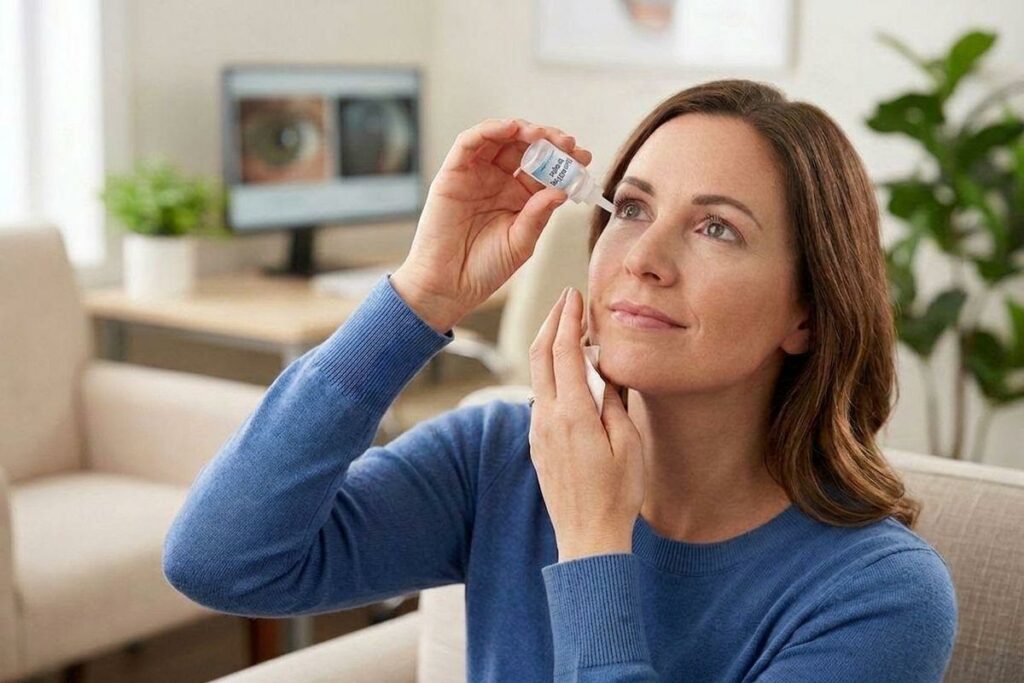
You put your contacts in feeling fine, but by mid-afternoon, your eyes feel like sandpaper. You’re blinking more, your vision looks a little hazy, and you’re already counting down the hours until you can take them out. If that sounds familiar, you’re probably not imagining it. Baalman Eye Care Center sees this pattern often, and it’s one of the more common reasons people come in looking for real answers about their contact lens comfort.
Contacts can contribute to dry eye by limiting oxygen flow to your cornea and drawing moisture away from your natural tear film. Your tear film is a thin layer that keeps your eyes comfortable and your vision clear. When a lens sits on top of that layer all day, it can disrupt the balance, leaving your eyes feeling drier the longer you wear them. The good news is that dryness with contacts is something a thorough contact lens exam can often help address.
Common Symptoms and Risk Factors to Watch For
Dry eye doesn’t always feel the same from person to person. Some people feel a sharp sting, while others just notice their vision going in and out of focus. Pay attention if you experience any of these:
- A burning, stinging, or gritty sensation, like something is caught in your eye
- Blurry vision that temporarily clears when you blink
- Redness that gets worse as the day goes on
- Eyes that feel heavy or tired well before bedtime
Who Is More at Risk
Dry eye can affect anyone who wears contacts, but some people are more likely to notice symptoms than others, including:
- People going through hormonal shifts, including pregnancy or changes related to the mid-30s and 40s, often notice increased dryness
- People over 40 naturally produce fewer tears, which makes lens wear more noticeable
- Anyone who spends several hours a day on a screen tends to blink less, which reduces how often the tear film refreshes
- A history of seasonal allergies can add extra irritation on top of contact-related dryness
What Makes Dry Eye Worse with Contacts?
Lens Fit, Material, and Wear Habits
When it comes to contact lens comfort, the secret isn’t just about the schedule; it’s about the connection between the lens material, the fit, and your own eye chemistry.
Here is why your lens choice and wearing habits matter:
- The fit matters: A lens that doesn’t match your eye’s unique curvature can physically shift your tear film with every blink. This constant mechanical disruption is a leading cause of mid-day dryness and irritation.
- The danger of over-wearing: Contact lenses are porous. Past their recommended replacement date, they accumulate a buildup of proteins, lipids, and environmental debris. This not only creates a gritty sensation but also increases the risk of eye infections.
- The hydration paradox: It is a common misconception that high water content is always better. These lenses often require significant moisture to stay hydrated, and they may “pull” that moisture directly from your tear film, ironically leaving your eyes feeling drier.
- Material science: Modern materials like silicone hydrogel are designed to be more breathable and stable than older hydrogel options. Matching the lens material to your specific environment and tear quality is the most effective way to maintain comfort from morning until night.
Environment and Lifestyle Factors
Your daily surroundings and personal health habits play a significant role in your ocular comfort. Factors you might overlook, such as your climate or medication routine, can directly impact how your eyes retain moisture throughout the day.
- Environmental triggers: Climate control systems like heating and air conditioning, along with natural elements like wind, create dry air environments. This accelerates tear evaporation, leaving the ocular surface vulnerable to irritation.
- Medication side effects: Many common prescriptions, including antihistamines, antidepressants, and certain blood pressure medications, can disrupt your body’s natural tear production, leading to persistent dryness as a secondary effect.
- The role of nutrition: Systemic health is essential for eye surface maintenance. A deficiency in omega-3 fatty acids is often linked to poorer tear quality, as these nutrients are critical in supporting the lipid layer that prevents tears from evaporating too quickly.
How a Dry Eye Evaluation Can Help
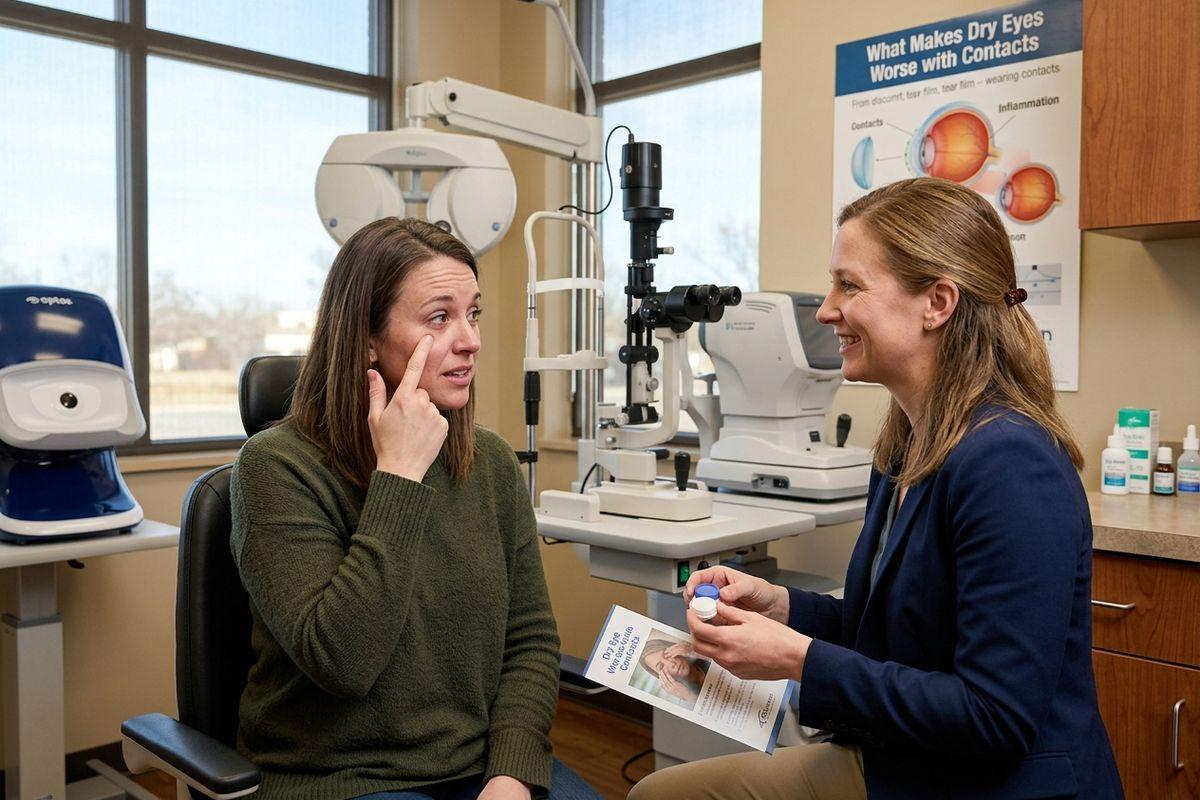
Figuring out what’s actually contributing to your dryness takes more than a basic vision check. Our team at Baalman Eye Care Center uses specific tools to measure what’s happening at the surface of your eye, so the approach to treatment fits your actual situation. Testing may include:
- A Schirmer test measures how much tear volume your eyes actually produce in a set amount of time
- Tear break-up time, or TBUT, shows how quickly your tears evaporate between blinks
- Corneal topography maps the surface of your eye to spot irregularities that could affect how a lens sits and how your tears spread.
What the Exam Looks At
The evaluation goes beyond just measuring tears. Your eye doctor also reviews how your meibomian glands are functioning. These small glands along your eyelid edges produce the oily layer that keeps tears from evaporating too fast. If those glands aren’t working well, rewetting drops alone may not fully address the problem.
Contact Lens and Treatment Options for Dry Eye
Lens Choices That Can Improve Comfort
Sometimes a lens change makes a significant difference. Not every lens type works the same way for dry eye, and finding the right fit for your eye and your lifestyle is part of what a thorough contact lens exam covers.
- Scleral lenses vault over the cornea and hold a small reservoir of fluid against your eye, which can help keep the surface consistently moist throughout the day
- Daily disposables start fresh each morning, so there’s no overnight buildup of deposits that can irritate already-dry eyes
- Silicone hydrogel lenses allow more oxygen to pass through to the cornea, which can reduce the tired, heavy feeling that comes with longer wear times
Dry Eye Treatments to Pair with Contacts
In some cases, changing the lens isn’t enough on its own. A few treatment options can work alongside your contact lenses to help your eyes stay more comfortable. The dry eye therapy options available at Baalman Eye Care Center are tailored to what your specific exam findings show, not just a one-size approach.
- Punctal plugs are small inserts placed in the tear drainage ducts to help your natural tears stay on the eye’s surface longer
- Prescription drops, serums, and amniotic membranes can support the eye’s surface when dryness is more significant
- Taking regular breaks with glasses gives your eyes a chance to recover, especially on long screen days
Find Relief
Dry eye and contacts don’t have to be an either-or situation. With the right evaluation and the right approach, comfortable contact wear is often possible. If your eyes have been feeling dry, tired, or irritated, our team at Baalman Eye Care Center in Wichita is ready to take a closer look. Schedule your eye exam today.